Tree Surgeon Recycling & Sustainability Policy
 Tree Surgeon teams are committed to reducing waste, reusing materials and increasing recycling across every job. Our tree surgeon services prioritise careful on-site sorting, and where possible we divert green waste from landfill into productive reuse streams. As an experienced arborist and tree care provider, we set a clear recycling percentage target and transparent actions so customers know how their tree surgery projects contribute to a low-carbon local economy.
We have set an ambitious long-term recycling target of 85% of all arisings from tree work to be reused, chipped, composted or otherwise recycled within five years. This target covers wood, green waste, metal fastenings and packaging from equipment. Achieving an 85 percent recycling rate requires strong logistics, partnerships with local reuse organisations and careful separation of materials at the point of work.
 On-site separation follows the boroughs' approach to waste separation: wood and green waste are treated like organic (green-bin) material for composting, small metal items and fixings are collected with mixed recycling, and bulky timber is assessed for reuse or chipping. Where borough policy supports kerbside bulky collections or dedicated green waste schemes, our tree surgery teams coordinate with local councils to ensure material is moved to the correct stream quickly.
Local Transfer Stations and Responsible Disposal
We use authorised local transfer stations and depots to minimise transport distances and double handling. Typical facilities we work with include borough transfer stations, community wood hubs and regional composting centres such as the Riverview Transfer Station and Eastside Transfer Depot. Using nearby transfer stations reduces mileage and makes it easier to direct materials to the right processing route ??? chipping, composting, or wood reprocessing.
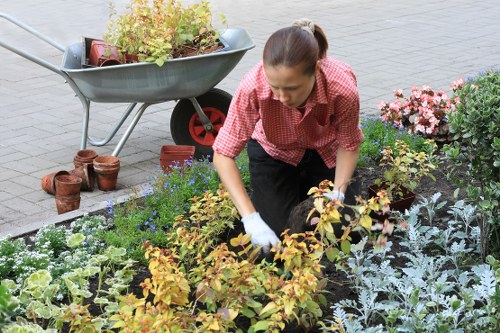
![A person with light brown hair tied back, wearing a pale yellow knitted sweater, blue jeans, and red gardening boots, is kneeling on a neatly trimmed grass lawn and tending to a vegetable garden bed. The garden bed is bordered by wooden planks and contains a variety of leafy green vegetables, with some plants showing dark purple leaves, others bright green, and some with lighter, ruffled leaves. To the left of the gardener, a wooden gardening tool set in a box is visible, with trowels and pruning shears inside. The surrounding outdoor space has lush green foliage and other garden plants, indicating a well-maintained garden environment. The weather appears clear and bright, suitable for outdoor gardening activities, which aligns naturally with gardening services such as lawn care and planting assistance offered by companies like Tree Surgeon near [POSTCODE] or in the [TOWN] area, supporting sustainable outdoor maintenance and gardening efforts.](/pub/_photos/gardening/f1463008904.jpg) Our arboricultural services include a clear chain of custody for every load taken off-site. Crews log material weights and destination points, enabling us to measure progress against the recycling percentage target. Where raw timber is suitable for reuse we prioritise local processing through community wood yards and social enterprise mills to keep value and jobs in the area.
Our arboricultural services include a clear chain of custody for every load taken off-site. Crews log material weights and destination points, enabling us to measure progress against the recycling percentage target. Where raw timber is suitable for reuse we prioritise local processing through community wood yards and social enterprise mills to keep value and jobs in the area.
Small branches and brush are chipped on-site when appropriate; chips are used for mulch or transported to composting facilities. Larger stems are inspected for reuse potential: some become reclaimed timber for local craft projects, others are sent for biomass processing where feasible. Our tree care team ensures materials are matched to the best possible circular pathway.
Partnerships with Charities and Community Projects
We have formal partnerships with charities and non-profit groups to maximise social value from tree surgery arisings. Wood suitable for furniture or community projects goes to local charities and maker spaces rather than being discarded. Items that can be repurposed for community gardens, play areas or urban greening projects are offered first to partner organisations.
![A woman wearing a pink sun hat, pink gardening gloves, and a light pink top is gardening in a landscaped outdoor space, tending to yellow flowering plants in a wooden planter box. The garden features a well-maintained lawn with dense grass in the foreground, bordered by a flower bed that includes white blossoms and greenery. In the background, there are tall trees with green foliage, creating dappled sunlight filtering through the leaves, indicative of a bright, sunny day. To the right, a blue watering can rests on the grass beside the planter, suggesting ongoing outdoor maintenance. The setting appears to be a private garden or backyard, with a natural, orderly layout that incorporates different garden elements such as soil, grass, shrubs, and flowering plants, supporting sustainable and environmentally-friendly gardening practices. The overall scene shows a calm and productive outdoor space within a residential area near [TOWN], helping to naturally enhance local gardening services and emphasis on sustainability.](/pub/_photos/gardening/f1451962792.jpg) Our collaborations include donation schemes for usable timber, support for community composting initiatives, and joint projects with local conservation charities. These partnerships reduce waste, create training and employment opportunities, and ensure that tree surgeon wood resources benefit neighbourhoods rather than being lost from the circular economy.
Our collaborations include donation schemes for usable timber, support for community composting initiatives, and joint projects with local conservation charities. These partnerships reduce waste, create training and employment opportunities, and ensure that tree surgeon wood resources benefit neighbourhoods rather than being lost from the circular economy.
We maintain a list of approved charitable partners and social enterprises that accept different material grades ??? from fine craft timber to coarse woodchip. This structured approach helps us increase the percentage recycled while delivering measurable community benefits.
Low-carbon transport is a core part of our sustainability plan. Our fleet now includes low-emission vans ??? electric vehicles for short urban hops, plug-in hybrids for mixed routes and Euro 6 diesel vans when heavier loads require them. Route planning software minimises mileage, combining jobs in the same neighbourhood to reduce fuel consumption and air pollution.
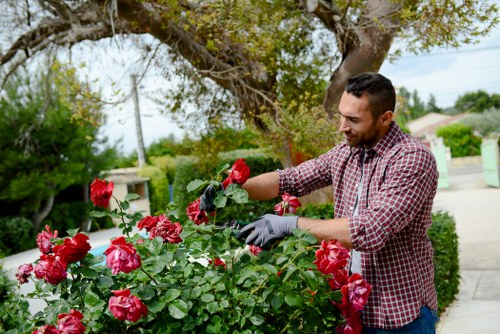
![A man wearing a straw hat and green gardening gloves is carefully pruning or trimming a dense, leafy shrub in a well-maintained garden. The shrub has dark green, glossy leaves and is situated in the foreground of the outdoor space. In the background, there are other plants and trees, with lush greenery indicating a healthy garden environment. The ground appears to be a mix of grass and soil, and there may be paving or decking surfaces nearby, characteristic of landscaped outdoor areas in the vicinity of [POSTCODE] or [TOWN]. The scene is illuminated by natural daylight, suggesting a clear or partly cloudy weather condition, typical for outdoor gardening activities. This setting reflects professional gardening and landscaping practices, with visible attention to plant care and garden maintenance, supporting services offered by local companies like Tree Surgeon in maintaining vibrant, sustainable outdoor spaces in the community.](/pub/_photos/gardening/f1407729664.jpg) We monitor van emissions and set fleet reduction milestones, aiming to move to a fully electric urban fleet where infrastructure permits. The use of low-carbon vans, combined with transfer-station strategies, supports our recycling percentage target by lowering the environmental cost of transporting materials to recycling and reuse facilities.
We monitor van emissions and set fleet reduction milestones, aiming to move to a fully electric urban fleet where infrastructure permits. The use of low-carbon vans, combined with transfer-station strategies, supports our recycling percentage target by lowering the environmental cost of transporting materials to recycling and reuse facilities.
As a tree surgery company and local arborist service, we publish annual sustainability summaries showing how much material was re-used, composted or sent for energy recovery. Those metrics help us refine operations and strengthen partnerships with waste managers and charities, keeping the local circular economy robust and transparent.
Practical recycling activities we practise include:
- On-site chipping for mulch and compost feedstock
- Segregation of metals and fixings for standard recycling streams
- Sorting of timber by quality for reuse, salvage or decorative woodworking
- Delivery of green wastes to borough composting facilities aligned with local green-bin schemes
- Donation pathways for serviceable timber and crafted offcuts to charities and community projects
Our sustainability strategy is built around measurable outcomes: reducing landfill, meeting our 85% recycling goal, lowering fleet emissions with low-carbon vans, and creating value through community partnerships. As a trusted tree surgeon company and provider of arboricultural services, we believe responsible tree care includes stewardship of the materials that result from our work.
We invite local councils, charities and residents to engage with our reuse programmes ??? together we can keep wood and green waste in productive, local circulation and make urban tree surgery truly sustainable.